In my last blog post, I reported on the news that most of the public-private led local enterprise partnerships (LEPs) have yet to clarify what planning-related roles and responsibilities they might take on.
Without wanting to state the obvious, there's a huge amount of other LEP-related issues that have yet to be worked out, one of which came to the fore at a recent conference I attended on the future of LEPs. The event was hosted by law firm Bircham Dyson Bell and included a presentation by one of the company's partners, Nick Evans, who issued a stark reminder to LEPs that their powers and sphere of influence would be limited unless they had "some sort of legal 'personality'".
'In the rush to get LEP bids approved, board members probably won't have given full consideration to how they would legally constitute their partnership'
This won't be news to many people - business minister Mark Prisk told a select committee meeting last autumn that LEPs will need to be legally incorporated in order to acquire assets, distribute public funding or win contracts (although he added that he would "not want to be prescriptive about what that legal status might be").
Nonetheless, in the rush over the past few months to get LEP bids approved, appoint boards and determine priorities, partnerships probably won't have given full consideration to how they would legally constitute their LEP, if at all.
But what was clear from Planning's survey of LEPs, mentioned above, was that LEPs are ambitious about the level of involvement they want to have in local strategies but, according to Evans, they might find themselves limited in what they can achieve because they are not statutory bodies.
He suggested LEPs could adopt the following legal structures in order to boost their powers by becoming a company limited by guarantee or a special purpose vehicle, a legal entity set up to fulfil a particular purpose.
In addition to these, he said, there are other, non-incorporated delivery models that would enable them to help deliver local authority activities:
- Multi-area agreements (Maas)
- Economic prosperity boards
- Statutory/non-statutory working arrangements
You can view Evans' presentation here.
Meanwhile, at a separate conference, transport secretary Philip Hammond announced that LEPs would be allowed to manage Whitehall transport funding if they form consortia of a number of neighbouring partnerships. This would be a good solution to the issue of how LEPs can help bring forward transport projects when so many major transport schemes inevitably fall across a number of LEP boundaries and so require a degree of larger-than-local planning. However, it has yet to be determined whether these consortia will need a legal personality in order to manage transport cash.
Keep up to date with news on local enterprise partnerships with our dedicated LEP topic page and subscribe to its RSS feed here.

Showing posts with label transport. Show all posts
Showing posts with label transport. Show all posts
Friday, 4 March 2011


Thursday, 11 March 2010
High Speed Rail Announcement: all the reaction
Refresh this page for all the reaction to the Government's high-speed rail announcement - and add your own comments below.
In the end Lord Adonis plumped for a Y-shaped route, with Liverpool, Newcastle and Scotland missing out for the time being. Click here to see Lord Adonis' hand-drawn plan for an Inverted S route.

Richard Anning, Chief Executive of Sydney & London Properties, who act as Project Manager for the Euston Estate:
“We are delighted that Euston has been chosen as the preferred London terminus for High Speed 2. This will bring much needed investment to the locality which will, in addition to the transport hub, provide a mixed use commercial development scheme which will be of immense benefit to the neighbouring communities as well as those passing through and working in the area.
“For more than 4 years, Network Rail has been talking about the modernisation of Euston Station, but no development agreement has been signed with its preferred developer, British Land, nor has a masterplan been produced.
“We hope that today’s decision will ensure that the planning can now begin in earnest for a new Euston Station.”
Ian Trehearne, partner at law firm Berwin Leighton Paisner:
“The proposal by the Government for a new high-speed line between Birmingham and London must be welcomed by passenger groups and the business community.
“The overcrowding on the line from Birmingham to London is endemic and growing. The proposed solution will do much to improve regional economic development as well as improving the passenger experience and potentially improving the environment.
“The next step is assessing how Heathrow is incorporated into the plan. Only an interchange on the Great Western Mainline close to Heathrow will offer sufficiently direct interconnection to improve surface access. This will improve both passenger experience and the environment and provide the realistic potential for satisfactory rail-air substitution. But this requires a different alignment from the current proposal. Neither of the potential alternatives - the Crossrail connection nor a loop to Heathrow - will prove sufficient.
“Our experience with HS1 shows that there are tremendous opportunities for landowners and authorities along the route to play an active role in making this exciting proposal a reality; bringing specific economic benefits to their area, and making the most of the new accessibility which the stations will create - as occurred around Ebbsfleet.
“We now move into the detailed phase, with design and environmental assessments and community consultations before this can be put to Parliament. Given the general election, this will take some time, at least the seven years predicted. But the prize is worthwhile. It is a proposal that will bring significant economic, social and environmental benefits to the UK.”
John Cridland, CBI Deputy Director-General, said:
Comment from Ian Trehearne, partner at Berwin Leighton Paisner, on the Government’s proposal for a new high-speed rail network.
“The proposal by the Government for a new high speed line between Birmingham and London must be welcomed by passenger groups and the business community.
“The overcrowding on the line from Birmingham to London is endemic and growing. The proposed solution will do much to improve regional economic development as well as improving the passenger experience and potentially improving the environment.
“The next step is assessing how Heathrow is incorporated into the plan. Only an interchange on the Great Western Mainline close to Heathrow will offer sufficiently direct interconnection to improve surface access. This will improve both passenger experience and the environment and provide the realistic potential for satisfactory rail-air substitution. But this requires a different alignment from the current proposal. Neither of the potential alternatives - the crossrail connection nor a loop to Heathrow - will prove sufficient.
“Our experience with HS1 shows that there are tremendous opportunities for landowners and authorities along the route to play an active role in making this exciting proposal a reality; bringing specific economic benefits to their area, and making the most of the new accessibility which the stations will create - as occurred around Ebbsfleet.
“We now move into the detailed phase, with design and environmental assessments and community consultations before this can be put to Parliament. Given the general election, this will take some time, at least the seven years predicted. But the prize is worthwhile. It is a proposal that will bring significant economic, social and environmental benefits to the UK.” "For much of the last century, there was simply not enough long-term planning on our railways, so it is encouraging to see this kind of visionary thinking. We need investment in our railways over the long-term to avoid congestion, especially on the crowded West Coast mainline. The strong long-term pipeline for engineering, construction, jobs and growth is also very welcome.
"But high speed rail will come with a hefty price tag and sooner or later the question of who pays for it will have to be answered. Private sector support for the concept of high speed rail should not be misread as a willingness to write a blank cheque – at a time of severely stretched public finances a full and open consultation on private funding will be essential. Equally, high speed rail must not be allowed to drain investment from other transport priorities.
Stephen Joseph, Executive Director of Campaign for Better Transport, said the Government has failed to show that the high speed rail plans will get people out of cars and planes. He also warned against cutting transport funding today to fund expensive “jam tomorrow”.
He said: “The danger is that a high speed line will suck money out of the current transport network. The last thing people want is service cuts, higher fares, and more potholes, while the executive classes are treated to gleaming new high speed trains.
“Even with extra money on the table, there must be a strategy to get people onto rail. The Government’s plan is high speed rail plus business as usual. It will make no difference to carbon emissions, and could even make things worse. Fares must be cheaper than flying and driving and high speed rail must be an alternative to new motorways and airports.”
Conservative shadow transport secretary Theresa Villiers said the Government was making a "big mistake" in not taking HSR2 through Heathrow ***. She said if elected a Conservative government would begin work straight away to create an HSR line connecting London, Heathrow, Birmingham, Manchester and Leeds. She said on the line would begin in 2015 - two years earlier than the planned start under the Government's plans.
She said: "Labour have betrayed the vision we set out three years ago for HSR. Their line to Birmingham leaves the north of England, Scotland and Wales out of the massive social, economic and regeneration benefits of HSR.
"And failing to take HSR through Heathrow would be a big mistake and a major lost opportunity for the environment. Labour's deeply misguided support for a third runway (at Heathrow) has distorted their approach to HSR.
"The next Conservative government will begin work immediately to create an HSR line connecting London and Heathrow with Birmingham, Manchester and Leeds, with construction to begin in 2015. This is the first step towards achieving our vision of a national HSR network to join up major cities across England, Scotland and Wales."
Read Villiers blog on the announcement here
*** Though in his statement Adonis pointed out that the Conservative proposal, based on that of the engineering firm Arup, does not provide for a station that is actually on-site but one that is 2.5 miles from the airport, requiring all passengers to undertake a transit journey.
Conservative-controlled Buckinghamshire County Council, pressed the case for the line to run via Milton Keynes, shadowing the existing West Coast Main Line. Val Letheren, the council's cabinet member with responsibility for transport, said:
"There is no need to sacrifice our beautiful countryside because of the fact that it is the shortest distance from London to Birmingham. We have more lawyers per square mile in Buckinghamshire than any other county and we will fight this tooth and nail."
Brendan Barber, General Secretary of the TUC, said:
“High speed rail links have been a huge success across Europe and it’s vital that the UK’s rail infrastructure is not left behind," he said.
“A new high speed rail link will deliver huge economic benefits to all of the regions it serves, create thousands of highly skilled jobs and contribute to a greener transport system.
“But the UK must not repeat the mistakes of other countries where investment in high speed rail came at the cost of other national and regional services, which were left to decay.”
David Frost, director general of the British Chambers of Commerce:
"Continued investment in Britain's transport infrastructure will underpin economic growth, support business in driving recovery and create jobs. That is why we support a comprehensive HSR network that provides vital extra capacity and helps British companies compete on a global scale.
"With the public finances in such a poor state, the budget for this important project needs to be carefully considered. HSR is a long-term investment but it cannot be built at the expense of the current rail network. There must now be a binding, cross-party political consensus to ensure that both HSR and upgrades to the existing rail system proceed over the next two decades."
Former deputy PM John Prescott, on his blog:
"This will at last connect the Midlands and the North by high speed rail to the South and Europe and finally fulfill an empty promise made by the Tories 20 years ago, which they failed to deliver.
"It will make Britain a high speed rail country, which is good for the North and the Midlands and good for the environment. More importantly it will also help to reduce the economic and social differentials between North and South
"A modern transport system for a modern Britain that can only be delivered by Labour Governments."
Ralph Smyth, senior transport campaigner, with the Campaign to Protect Rural England, said:
"By using existing and disused transport corridors as well as tunnelling, the impact on the Chilterns is less than feared. But the impact on the Warwickshire, where the line is proposed to run through open countryside, is a major concern.
"There is a strong need for more than just fine-tuning. The firm commitment to community consultation made by Lord Adonis must be backed up by real engagement and flexibility. As with the Channel Tunnel Rail Link, local people's contribution can help turn a contentious route into something that works both national and locally."
The Regional Cities East group of local authorities in the East of England have questioned the proposed high speed rail route, announced today by Transport Secretary Lord Adonis.
Neil Darwin, Director of Regional Cities East, said:
“The decision for the high speed rail line to completely by-pass the East of England is a big disappointment. The region has some of the most economically important cities in the country, including Cambridge, Peterborough and Norwich – the hot favourite to gain capital of culture status. Ignoring the region is a big mistake at a time when we need to get the best out of every economic asset.
“There’s also a danger that the huge costs of high speed rail will drain investment from other parts of the rail network. Routes like the Great Eastern Mainline, which connects Norwich, Ipswich and Colchester to London, are in desperate need of upgrades. Important though high speed rail is, we can’t afford to leave other areas lagging behind.”
Scotland secretary Jim Murphy said the Scottish Government will have to pay its share if the line is to be extended north.
He said: "This is a historic announcement by the Labour government, the fastest trains in history, 250mph, initially going to Leeds and Manchester, and then we're committed to getting it to Scotland as well."
Scotland's transport minister Stewart Stevenson said: "[Extending the line to Scotland] is of course something we will discuss with the UK government. Cross border services are a matter for Westminster rather than for ourselves in Scotland."
Tuesday, 17 November 2009
Forth crossing fly-through
Scottish ministers today unveiled the legislation needed to build a new road crossing over the Forth. The crossing, which would have a span of approximately 2.7km, is being planned due to the deteriorating condition of the existing bridge.
Click the video below to view a fly-through of how the bridge might look when completed:
Tuesday, 3 November 2009
Boris's circus act
London mayor Boris Johnson stopped the traffic for five minutes on Oxford Circus yesterday, to officially open a Tokyo-inspired diagonal crossing that will allow pedestrians to traverse in all directions one of Europe’s busiest intersections. The redesigned crossing, part of a scheme in the West End approved by Westminster City Council, is modelled on Hachiko crossing in Tokyo’s Shibuya district, where an awful lot of pedestrians weave their way to the other side of the road every day. A handful of Londoners acknowledged the inspiration, dressing up as their favourite Japanese manga character.
The makeover, which included removing guardrails and other clutter, has increased the amount of pavement space by nearly 70 per cent, Transport for London says. We went to Oxford Circus to see how commuters felt about the new crossing.
“To be able to move away from the panic of cyclists and traffic around you feels quite liberating,” said Leeroy Milton, who works in retail and negotiated the 25 metre crossing qu
 ite smoothly. “I was able to swing my arms quite a bit. I’ve always found the amount of time it takes to navigate this area very frustrating. I think it will give priority back to pedestrians.”
Whether or not Oxford Circus’ 32,000 pedestrians per hour can pass through it as unflappably as their counterparts in Shibuya remain to be seen. Tokyoites don’t tend to swing their elbows with quite the same force that Londoners do. (However, preliminary eye-witness accounts reported no incidents.)
But it did make us think, what will be the next Tokyo trend to be adopted by London’s mayor? White-gloved wardens to push commuters onto rush-hour trains? Boris cycling to City Hall in a cosplay-style maid outfit?
It seems appropriate to give the last word to a Japanese. “It felt pretty familiar,” said Teppei Inamoto, a London-based freelance graphic designer, when asked about his Oxford Circus saunter. “I think Londoners will be fine walking diagonally - once they get used to it.”
Monday, 22 June 2009
Olympic sight
I recently went for a tour of the Olympic Site in east London and was struck by the infrastructure that is in place just to keep the site ticking over.
Some 4,000 people are currently working on the site itself building the venues, the village and everything in between, figures like this make it realistic to describe the project as a small town in itself, but certain things I encountered made the site seem more like a country. For instance border control.
Due to terrorism, security is tight. As I wasn't in possession of my driving licence the day I visited I needed to supply my birth certificate and another form of ID and be signed in by one of the top brass.
By the time I reached my entry point, round the other side of the site I had entered two separate London boroughs (Hackney and Newham) this gives an idea of scale. But how do these 4,000 workers get around the car-free site? Well, like any well-run small town, the site has public transport, of course.
Three separate bus routes to be exact. The contractors arrive by train, tube or bike (for which there are hundreds of racks at either end of the site) then jump on a bendy bus and find their way to their venue.
Its an essential tool to avoid getting lost, according to the people who showed me round. The site is so active and ever-changing that a road that you quite happily used yesterday to navigate the site might not exist tomorrow, they told me.
In addition to all this, there is the well-publicised canal dredging, and a very active operation aimed at reusing as much material found on site as possible.
If the set up for the games-proper is as well thought out as the infrastructure that presently serves the nascent site, we've got nothing to worry about.
Wednesday, 6 May 2009
Boris's Ponte Vecchio pontificating
 In the latest news from the London mayor’s office, Boris Johnson has spoken of his vision of a Ponte Vecchio-style pedestrian bridge between Waterloo and South Bank. The mayor told LBC radio that he wants to create a ‘living bridge’ lined with shops, cafes and homes, and a greenhouse containing tropical trees and plants.
Johnson said the bridge would create “something that would once again provide a commercial zone, a place that you could live on, a bridge that actually had residential and commercial property on it as the old London Bridge did".
And this isn’t just a whim. Johnson has apparently based his vision on designs published 13 years ago by French architect Antoine Grumbach, who won a Royal Academy competition to design a habitable bridge. According to The Times the plans were given clout by a study by accountants KPMG that showed it could be built without dipping into the taxpayers' wallet.
But critics are quick to point out the problems in comparing his dream with that of the Old London Bridge. After all, as the rhyme goes, this did in fact fall down. In yesterday's Guardian, architecture critic Jonathan Glancey slammed the plans.
So what’s the solution? In theory, the idea of another pedestrian crossing over the Thames sounds like a good idea. But would pedestrians want their route to the office to include a journey through a giant greenhouse?
BY SUSIE SELL
Monday, 20 April 2009
Regeneration Street View snap shots #8 Oxford Circus
The introduction of a Tokyo-style diagonal pedestrian crossing at London's Oxford Circus was announced last week.
The topic raised a lively debate on this blog, which pretty much says all that's needed to be said about the project.
But the traffic chaos evident on Google's Street View tool tells its own story. Or rather, raises its own questions, such as:
View Larger Map
The topic raised a lively debate on this blog, which pretty much says all that's needed to be said about the project.
But the traffic chaos evident on Google's Street View tool tells its own story. Or rather, raises its own questions, such as:
- Why is a large lorry allowed to fume-up one of the world's busiest shopping streets?
- Why is that double-decker bus perpendicular to the road and seemingly blocking all traffic?
- And, did this genteel looking cyclist survive crossing the junction?
View Larger Map
Friday, 17 April 2009
Regeneration Steet View snapshots #7: Elephant & Castle
The refurbishment of this south London traffic interchange has been beset by delays and other wrangling.
When completed, the Elephant & Castle scheme will include 5,300 new homes and 120,000 sq metres of retail and commercial space.
Click and zoom and move around the project by clicking on the arrows.
View Larger Map
When completed, the Elephant & Castle scheme will include 5,300 new homes and 120,000 sq metres of retail and commercial space.
Click and zoom and move around the project by clicking on the arrows.
View Larger Map
Wednesday, 15 April 2009
Car scrappage rumours
Owners of old cars will have a spring in their step this week. Over the Easter weekend, the BBC reported that the Government is “likely” to use the April 22 Budget to give them a subsidy of about £2000 to trade in their old cars for a new one.
 The intention is to give the car industry a recession-countering lift, and at the same time reduce carbon dioxide emissions by getting gas-guzzling old vehicles off the road.
But does the idea really make sense as an economic development measure? Expert opinion differs, as I found when I spoke to a variety of prominent economic development figures last week.
Chris Green, chief executive of the consultancy SQW, helped devise the economic restructuring plan required by the closure of MG Rover at Longbridge in 2005. He believes that a contraction in the British car industry was inevitable, even if there had been no recession. “The industry is producing better and better cars that last longer and longer, but expecting people to scrap them more frequently,” he says, arguing that such a model was always unsustainable in the long term.
Trying to further prolong this artificial bubble of demand would be a mistake, he says. “The Government’s role should be to support research and development into more energy-efficient cars, rather than provide a short-term demand stimulus”.
Richard Ellis, chair of the East of England Development Agency, and current chair of chairs of the regional development agencies, agrees that the Government should be supporting the development of low carbon automotive technology. He would also like to see further fiscal incentives to encourage individuals to make greener choices in their day-to-day living. His big idea for prompting economic recovery is to send teams offering home energy efficiency improvements down every street in the country.
But he would also support the introduction of a scrappage scheme, as long as it was part of a package including other green measures. “Looked at in the round, it’s probably not a high cost scheme,” he says.
The Society of Motor Manufacturers and Traders claims that VAT receipts generated by increased sales would mean that it would cost £150-£160 million to allow 280,000 Britons to have a £2000 subsidy to replace an old car with a new, greener model. Not exactly small change, but not a huge price in the context of some of the Prime Minister’s other recession-fighting initiatives.
Last week the Government was being studiously non-committal about whether it would emulate its equivalents in all the other big Western European countries and introduce such a scheme. A spokeswoman for the Business, Enterprise and Regulatory Reform department rehearsed several arguments against adoption, including the fact that 80 per cent of new cars bought in the UK are imported.
But she also pointed out that nearly a million people in the UK are employed in selling, maintaining and manufacturing cars, making the industry highly important to the economy.
Personally, as I explained in the leader column in this week’s issue of Regeneration & Renewal, I think there would be better ways of stimulating the motor industry than the scrappage scheme. But if the BBC’s sources are correct, it will be ushered in the Budget, and much-loved old Jags and Rovers around the country will soon be heading to the knacker’s yard.
Tuesday, 14 April 2009
Forget Tokyo: It's time to rid Oxford Circus of traffic
Oxford Street is set for a taste of Tokyo. Oxford Circus, the intersection between London's most famous shopping street and the elegant Regent Street, is to be reworked. Under the plans, traffic approaching the crossroads from all four directions will be halted simultaneously at red lights, allowing pedestrians to cross diagonally as well as straight ahead en masse. The scheme, modelled on the Shibuya crossing in the Japanese capital, will also see much of the ugly street clutter and barriers that blight Oxford Circus removed.
That may help, but it won't help enough. Inexplicably – certainly to Londoners, many of whom try their best to avoid it – Oxford Circus is among the world's top destinations, getting 200 million visitors a year. For visitors from smaller countries, the concentration of so many big retail brands in a long, wide thoroughfare may command awe, briefly, but it doesn't take much more than a second glance to see that London's shopping heartland is something approaching a national disgrace. Londoners may know there are plenty of better areas to spend a Saturday shopping in the capital, many visitors don't.
Blessed with a grand boulevard and fine buildings, Oxford Street has managed to fashion a sow's ear from a silk purse. The pavements are way too narrow to accommodate the throng of confused tourists and exasperated locals that blend awkwardly in the area. Shabby transitory retailers pollute the Tottenham Court Road end of the street. There is clutter everywhere – poor signage, ugly street furniture and unlicensed advertisements for such delights as the never-ending golf sale. But the area's fundamental problem is its traffic.
In spite of being closed to general traffic, Oxford Street is plagued by motor vehicles. These are chiefly buses moving at a snail's pace in a noisy, smelly, grumbling thin red lines; plus a few cabs with frustrated drivers and the odd lost boy-racer in a sports car. The air quality and environment is unpleasant – even crossing the road can be an ordeal.
A few pilot traffic-free days run by the New West End Company have been hits with shoppers, so the question is, instead of messing about with Tokyo-style pedestrian crossings, why not abolish traffic in Oxford Street completely and open up the street to pedestrians? Some people will moan that they can no longer catch their bus from outside, say, John Lewis, but this is a price worth paying. A clever programme of re-routing would do the trick, and people would get used to it.
Many of the world's best shopping areas are pedestrianised – including many in London itself, such as Covent Garden. It seems ludicrous that its biggest draw is relegated to monumental embarrassment by the smoke and choke of jammed-up traffic.
Friday, 3 April 2009
Country sliced
 A trip out to Dursley in Gloucestershire this week provided a salutary reminder of just how poor public transport can be in rural areas – and how vital it is that we improve the situation if we take economic development outside large town cities at all seriously.
The train from London pulled into Bristol Parkway where I hopped across the platform (not literally) to board the Birmingham train, which deposited me 20 minutes later at Cam & Dursley station. Then the fun began. It turns out that Cam & Dursley station is in the middle of a field. Really. I could smell manure. It's also over two miles away from Dursley itself.
I found a bus stop and discovered that the connecting bus service is conveniently timed to arrive one minute after the arrival of the hourly train service. Unfortunately, whoever drew up the timetable was seemingly unaware of the existence of my 1115 train. I'd have been okay had I arrived at 1015 or 1215. As it was, I started walking. It sounds pathetic, but after a 45 minute hike along the side of a busy road in inappropriate shoes, I was cursing all things rural.
I admit that the sweaty adventures of a metropolitan hack aren't going to do much to tug the heart strings of many readers. But there is a serious point. Recent years have seen the last of Dursley's manufacturing companies go to the wall, with little new industry coming in to provide vital new jobs. The obvious thing to do would be to commute to Bristol to find alternative employment, but without a car that's not a serious option. On my homewards journey I asked at the bus station in Dursley about the service to the station and nobody could provide me with any information. In the end I ended up getting on a different service which got me at least vaguely near my destination. I also learned that if I had wanted to take a bus to Bristol instead, the journey would have taken an hour and a half.
If the jobs aren't going to come to Dursley, Dursley needs to go to the jobs. Unfortunately, the public transport system just isn't fit for purpose.
Boris's bargain bus
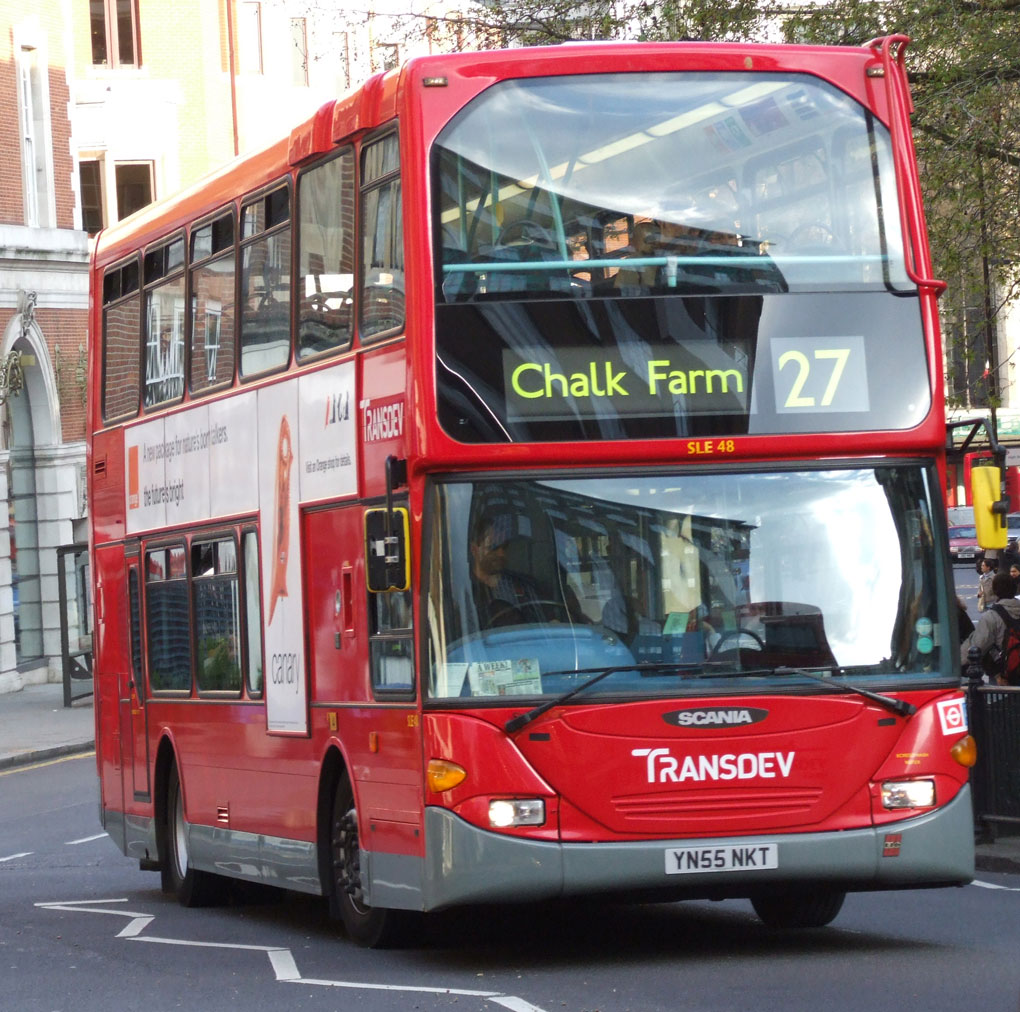 During the downturn, any measures to ease the financial pain and curb the rising tide of unemployment are always welcome.
It is hard for people to come off benefits and get back into work when job hunting proves to be a costly exercise.
That's why mayor of London Boris Johnson's decision to offer thousands of unemployed Londoners half-price bus and tram travel is welcome.
Cheaper travel to interviews, job centres, amenities and access libraries should go some way to make it easier for people to find work again.
If only leaders in other cities could install such measures as a response to the recession. But sadly, outside London, the bus system is deregulated – so bus companies who are their own boss prefer to clog up the most profitable routes while starving more marginal areas of services.
Thursday, 26 February 2009
Shovel siren
"Get building" - that's the message from Professor David Blanchflower, the maverick member of the Monetary Policy Committee.
Blanchflower wants the Government to commit to £90 billion worth of Barack Obama-style "shovel ready" public infrastructure projects over the next two years, to help stave off unemployment.
Blanchflower reckons the move could create about 750,000 jobs. He's a man worth listening to: after all this is the guy that warned his colleagues on the MPC to slash interest rates way before they agreed to do so, saying that the UK was heading for a unpleasant recession and that unemployment, not inflation, was the primary threat to public well-being.
Blanchflower was vindicated - jobs are being lost but, unlike previous slumps, deflation, not spiraling prices, is the attendant risk.
However, regenerators might be advised not to get excited by the prospect of a bumper jobs boost and a FDR-style New Deal on roads and railways (the magnificent Skyline Drive in Virginia's Blue Ridge Mountains that I drove over last summer is pictured).
 Blanchflower has ignored a convention that MPC members resist commenting on fiscal policy, and there's no evidence that the Treasury are even considering such a thumping fiscal boost in the Spring budget. To do so would add even more to the public debt, and the mandarins at Horse Guards Parade are notoriously conservative when it comes to public borrowing.
If it were me, I'd be tempted to throw caution to the wind and build our way out of this slump as the rogue professor advises. Yes, my generation will be the ones paying the lot off, but we'd have a whole bunch of roads, railways and regeneration to add to the family silver.
Subscribe to:
Posts (Atom)