Showing posts with label city regions. Show all posts

Monday, 11 October 2010

Poll: Should city mayors be in post before referendums?

At last week's Conservative Party conference in Birmingham, local government minister Bob Neill confirmed that the public will not be given the opportunity to vote on whether they want elected mayors in England's 12 largest cities outside London until after the mayors have been installed. The minister told Regeneration & Renewal that existing council leaders in the 12 largest cities outside the capital would automatically become city mayors, with referendums held at a later date to establish whether or not the public wants to keep them.
____________________________________________

Audio: Listen to the Regeneration & Renewal team discuss city mayors in the latest Ten Minute Briefing, here.
____________________________________________

The wording of the coalition agreement between the Tories and Lib Dems, published in May, had suggested that city mayors would be installed before referendums. It said: "We will create directly elected mayors in the twelve largest English cities, subject to confirmatory referendums and full scrutiny by elected councillors." However, at the time, the Department for Communities and Local Government refused to elaborate further, saying that it was unable to provide details of how the referendum process would work, when it would take place, or the powers that would be devolved to the mayors.

The Government's move to install city mayors before referendums take place to establish whether or not the public wants to keep them could well be intended to save the coalition the embarrassment of voters preventing the plans from getting off the ground. After all, since the 2000 Local Government Act, there have been 37 such referendums, with 12 passed and 25 rejected by voters. But how does this fit with the coalition's supposed support for the concept of localism?

• Let us know what you think by voting in our poll (top right), or commenting below, leaving your name and organisation.

Monday, 11 May 2009

Will the new city-regions agree to establish a senate?


Regeneration & Renewal carries an interview this morning with John Healey, the local government minister. In it, he tells me that the passage towards greater devolution of powers from Whitehall will be smoothed somewhat if Greater Leeds and Greater Manchester accept the government's model of governance, the opaquely-named economic prosperity board.

EPBs effectively turn the leaders of each constituent council in a city region into senators, who have one vote on policies expected to be run at the city-regional level, such as regeneration and skills. Crucially, if there's one or more councils who disapprove of a policy, but who are out-voted by their other 'senators', the policy is carried. 

I think Healey is absolutely right to push for an EPB. Why? Well, councillors used to tell us that such robust systems are unnecessary, as decisions can be made across boundaries merely through collaboration and agreement by committee. Unfortunately, the fiasco over congestion-charging in Manchester undermined that argument. If the city-regions are not going to going the way of Greater London and establish a directly-elected mayoralty, they need to show us how tough decisions will be made in times where constituent councils in an area fail to agree on a policy.

Although neither Leeds nor Manchester have yet agreed to an EPB yet, sources in Leeds City Region (which, interestingly, now has its own .gov website) say they are ready to consider it if the Government deems that its existing system comes up short.

Leeds says its existing system is not too far away from an EPB, although constituent councils can pull out of the city-region with a year's notice. And it would be really something if Leeds City Region bites the governance bullet first, considering Manchester made most of the city-regional running in recent years. 

One thing certainly seems true: if the city-regions want new decision-making powers, they need to show Whitehall they are capable of making decisions. 

Monday, 27 April 2009

London loads up on Sugar


Such is the public and media appeal of the London mayoral race that Boris has barely had the chance to oil the wheels on his commuter bicycle before the gossip begins about who may oppose him in 2012. The mayoral race that year holds a special prize for the winner: being mayor at the Olympic Games. 

Tonight's Evening Standard has a poll saying that if Sir Alan Sugar stood against Boris, he would beat the flaxen-haired Tory by 40 per cent to 32. The poll is slightly misleading, as it assumes that Sugar would stand as an independent – not beyond the realms of possibility – when an embryo proposal suggests he is being wooed as the Labour candidate

Still, party ID might not matter that much by 2012, and a Labour ID (as hard as it may seem today) may even help. London is usually a fairly Labour-friendly place, and by then David Cameron's Tories are likely to be in Number 10, and London often likes to vote against the incumbent national government. 

So let's assume the figures are robust and Sugar has a real chance of winning London, whether he stands as an independent or for Labour, of whom he is a supporter and a donor. Can he really win? My spidey-sense says Yes. 

Thanks to the hit TV show the Apprentice, he is a bigger name now than when he launched eighties supercomputer the Amstrad CPC464 (pictured). And Sugar has the right credentials – born the son of the tailor in Hackney, he is a man self made by hard graft. In the YouGov poll, working class voters favour Suralan over Boris by a large margin. And he's seen by the public as a no-nonsense figure who gets things done. I can see why he has public appeal. 

But would he be a good mayor? For what it's worth, I have my doubts. I suspect that, while I'm sure he has his mellower moments, Suralan is not too far from his TV persona. In short, he's a bully-boy. It's hard to run City Hall by just bulldozing through, it requires collegiate working. I'm not sure Sugar has the time or the inclination for such niceties. But that doesn't mean he won't win. 

Boris Johnson has pleased many and offended few since arriving as mayor with his sunny disposition and cross-party appeal. But so far he has lacked any big vision or ideas. He will be afraid that Sugar may one day say to him: "Boris, you're fired."

Wednesday, 22 April 2009

Warland – the new Leeds/Manchester border town

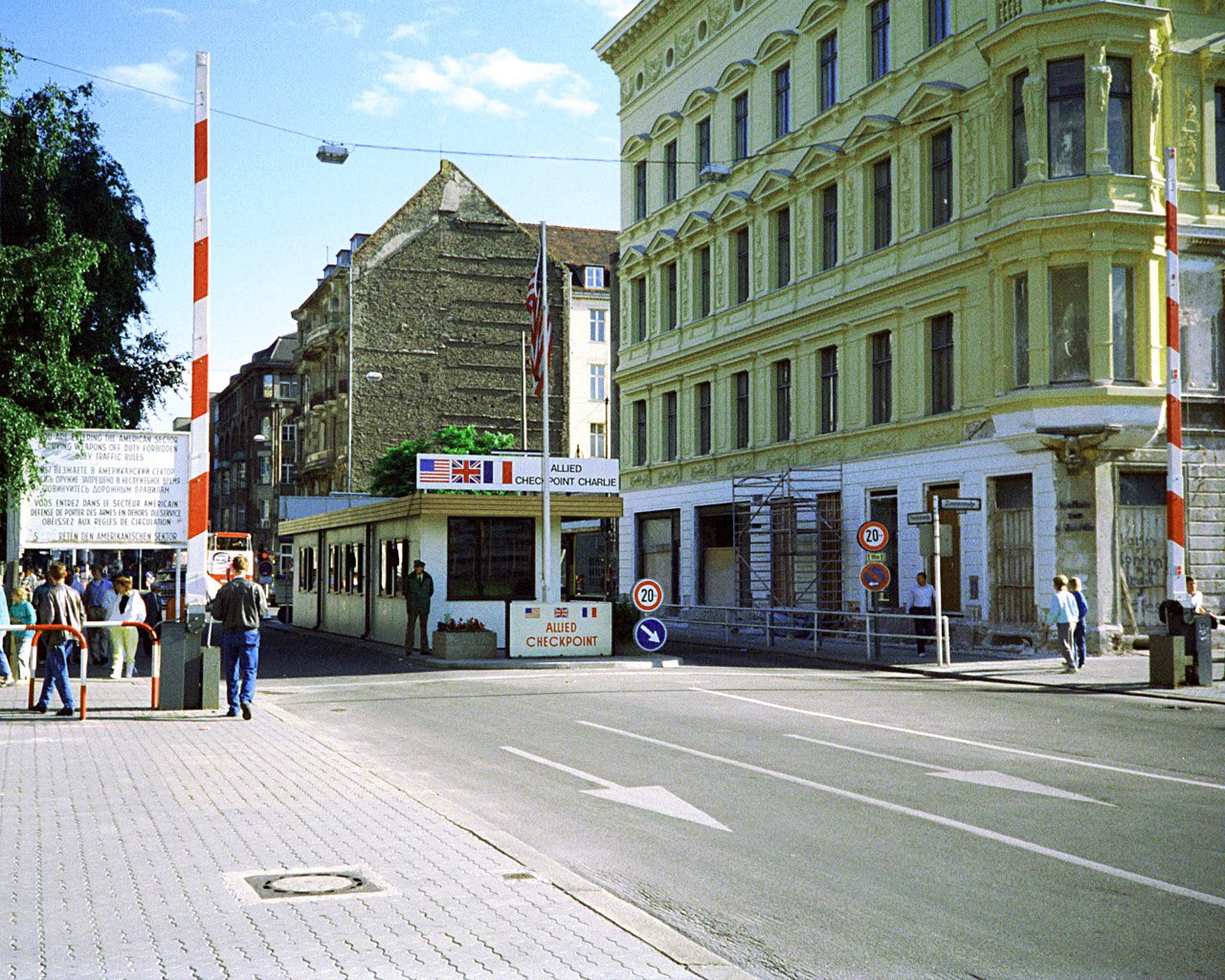
You couldn't make it up. The hamlet that sits slap bang on the new boundary between the Leeds and Manchester city regions, which are to be announced in today's budget is called Warland. Before 1974, it was the watershed between Lancashire and Yorkshire. From today, it will host the boundary between the two Pennine giants' official hinterlands. 

As far as we can make out, the chap on the boat is in what will from this lunchtime be Greater Leeds designate, just about to chug into Greater Manchester. The border is marked by the stone post next to the canalside. The boundary between the Metropolitan Boroughs of Calderdale and Rochdale riddles its way through Warland and has already caused some bizarre border disputes such as the one described in the second paragraph of this article involving an outside toilet. 

Sadly, I haven't had chance to speak to the locals about what they think about living on the new frontier. I suspect that, at this early stage, its new status as a Pennine Checkpoint Charlie is unlikely to be the topic of conversation at the Bird In The Hand


Budget 9am update: Manchester confirmed as statutory city region

9am update: I've just had Manchester confirmed as one of the new statutory city regions to be announced in this lunchtime's budget. I understand that the ten boroughs comprising Greater Manchester will join Leeds as one of the Government's newly approved formal city regions. New powers and freedoms over housing, regeneration and possibly transport spend are promised but these are expected to require primary legislation. As one blogger pointed out yesterday, Manchester and Leeds now share a boundary– or at least will do once the legislation goes through. We've found a border town – I'll be blogging about it shortly.

Tuesday, 21 April 2009

Blog exclusive: Leeds confirmed as statutory city region

We've just got a great exclusive here on the Regeneration & Renewal blog: I understand that Leeds has been confirmed as one of the statutory city-regions in tomorrow's budget.

Our story earlier expanded on a tip by the Manchester Evening News' political editor David Ottewell that the Yorkshire giant was likely to appear in the Budget. I have had an update in the past few minutes and understand that the rumours are true – Leeds will be one of the statutory city regions in tomorrow's announcement by the Chancellor.

Manchester is almost certain to join it. Having Leeds and Manchester leading the city-region charge may give the movement a bit of a fillip, and will make other big conurbations think seriously about joining the party.

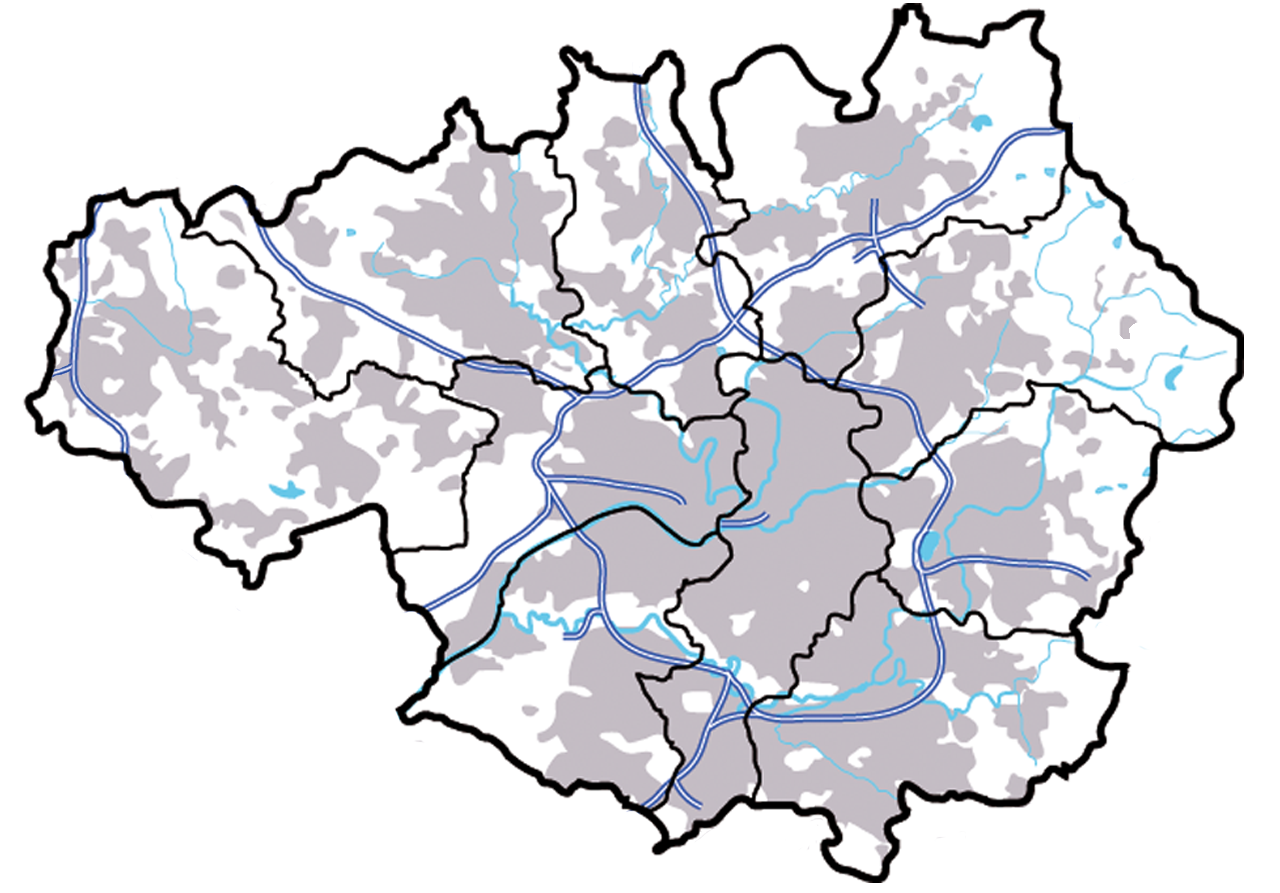
Here's our map of all the cities applying to Government for statutory city-region status. If successful they will gain new controls over portfolios such as housing, regeneration and transport.

Remember to log into the Regen.net tomorrow lunchtime for my live blog on Budget 2009. I'll be getting regular comments from a team of experts and posting them up as they come in.

Leeds tipped as surprise statutory city-region

There's plenty more budget rumours around today – one of the most interesting being one from David Ottewell that Leeds is in line for winning official city region status tomorrow.

Ottewell, a senior journalist on the Manchester Evening News, takes a keen interest in urban policy issues, is well connected and deserves to be listened to.

Ottewell's tip-off that his home town of Manchester is due for city region status will surprise no-one, but the news that its arch-rival, neighbouring city region of Leeds is to be included is more newsworthy, but seems intuitively correct. Not only will having the two Pennine giants in the package give the announcement weight, the inclusion of Leeds seems to support Regeneration & Renewal magazine's research and subsequent contention that big cities are ahead in the race for new powers.

The rumours keep on coming. The Guardian splashes on the fact that the Chancellor is planning a new fund to build council houses and restart work on stalled projects. Regeneration and housing could better than expected out of this one, but we shall see. I'll be live blogging on the budget tomorrow, and publishing comments from our team of experts as they come in. See you then.

Thursday, 16 April 2009

The Kiwis are about to teach us a lesson on city regions


Some of you may remember I blogged a few weeks ago about a recommendation by a Royal Commission in New Zealand to create a directly-elected city regional mayor for Auckland. Perhaps it was a world-weariness brought about by endless bickering here in England over similar plans, but I ended my piece suggesting the plan would get hopelessly watered-down. 

Mea culpa – it seems I wrote too soon. Save for a controversial tweak that will deprive Maori of three guaranteed seats on the new mayoral super council, the NZ Government has pledged to push through the plans for a super mayor. It has also warned vested interested in local government – Auckland metro currently has seven district mayors who will lose their jobs – to refrain from moaning. "We're open to the engagement but what we don't want to hear is particular self-interested groups talking about it," NZ local government minister Rodney Hide has warned. Well said. 

I wonder if Mr Hide, a member of NZ's new centre-right governing coalition, knows that's exactly what we've been doing here for the last seven years – talking about it. Only London – already the biggest and most powerful city by far in England – has a proper city-regional government. The plethora of independent boroughs in Greater Manchester, Birmingham and others resist meaningful change, with existing councillors seemingly being given a veto over any alteration that will reduce their power. 

Sometimes governments need to use a strong hand. Indeed, many would argue that's what governments are for. What's the betting that Auckland will have had a mayor up, running and helping integrate the city region promptly, while politicians in Manchester continue to bicker? The Kiwis are about to teach the old country a lesson. 

Tuesday, 31 March 2009

A Kiwi Boris?


I've just come back from New Zealand where I enjoyed a brilliant camper van holiday after the lovely wedding of two friends, an Englishman and a New Zealander. At the post wedding barbecue I found myself in a hauntingly familiar discussion when the brother of the bride was warning the couple, who live in London, against moving to Auckland. "It's a bad city," he said. "It has the land area the size of London with a tenth of the population, and is governed by five councils." 

I found it hard to disagree with him: New Zealand is a nation of such spell-binding, magnificent and diverse landscapes it is hard not to fall in love with it. But I doubt many people go there for its towns and cities – many are sprawling, hastily-built, uninspiring affairs where the density of population is too low to support services such as rapid transit, local restaurants or proper pubs. That comes as a shock to the system when you are used to the UK's distinctive and bustling metropolises. 

Auckland is NZ's biggest city and arguably the country's most desperate case: blessed with a splendid location around two beautiful harbours, planning has not been kind to the town. It has a population of more than a million but no rapid transit and in many districts identikit streets and uninviting road-junction food joints dominate. 

Yet New Zealanders are aware of the problem. A Royal Commission last week made the front pages by recommending that a London-style city regional mayor be installed to govern the entire metropolitan area, spruce up what locals describe as a "shabby" city centre and improve public access to Auckland's often closed-off harbours. There's an embryonic plan to build a metro – surely a major challenge for any new mayor given Auckland's car use numbers, some of the highest of any major city in the developed world. 

The Auckland plan has received a mixed welcome by many local politicians. Indeed some of the arguments about the loss of local identity sound strangely familiar. My guess is that the plan will eventually get watered down and the frustrating City of Sails will lose a once in a generation chance to unify its sprawling suburbs.